Reduce Forehead Creases Without Sacrificing Natural Expression
For many patients, forehead lines are the first sign of aging they notice — and one of the first they want to address. Whether your creases are only visible during expression or have become a permanent feature at rest, BOTOX can significantly reduce their appearance without surgery or downtime.
Jonathan Heistein, M.D. has served patients in Fort Worth and Southlake for more than 20 years, building one of Tarrant County’s most experienced injectable teams. From board-certified surgical oversight to nurse injectors with decades of hands-on experience, every forehead BOTOX treatment is guided by a team that understands how the upper face moves, ages, and responds to treatment.
The frontalis muscle spans the width of the forehead and activates each time you raise your eyebrows. Over years of repeated contraction, this movement gradually creases the overlying skin, forming the horizontal lines that run across the forehead.
Early on, these lines appear only during expression and fade when the face is relaxed. As skin loses collagen and elasticity over time, the creases can become etched into the skin and remain visible even without any muscle movement. Addressing forehead lines while they are still primarily dynamic — expression-related — often produces the most satisfying results.
BOTOX works by temporarily interrupting the nerve signals that prompt the frontalis muscle to contract. With the muscle at rest, the overlying skin smooths out, and existing creases become less visible. For patients who begin treatment before lines become deeply set, BOTOX can also slow the progression of wrinkle formation over time.
What makes forehead treatment particularly nuanced is the frontalis muscle’s relationship with the brow. This muscle is responsible not only for forehead movement but also for supporting brow position. Treating it without accounting for this balance can result in brow heaviness or a flattened upper face — outcomes that experienced injectors actively work to avoid through careful assessment and conservative dosing.
Few injectable teams in the Fort Worth and Southlake area bring the depth of experience found at Jonathan Heistein, M.D.
Dr. Heistein is certified by the American Board of Plastic Surgery and has been recognized as a Fort Worth Top Doctor every year from 2004 through 2022. His surgical background in facial anatomy gives him a distinct perspective on how BOTOX interacts with the structures of the upper face — an advantage that informs both his own injection approach and how he oversees the broader team.
Molly Skaggs, the practice’s lead cosmetic nurse injector, has been injecting BOTOX in Tarrant County since 1997 — making her one of the longest-tenured injectors in the region. Her approach is patient-centered and precision-focused, with particular attention to preserving the natural character of each patient’s expression.
Allison Holt, a certified cosmetic nurse injector with both a BSN and MSN, has been part of the practice since 2010 and brings a detail-oriented approach to upper facial treatment.
Patients at the Southlake location are also served by Brenda Ray, a certified nurse injector with more than two decades of experience who takes a conservative, results-driven approach to every treatment.
Before any injections are placed, your provider will evaluate your frontalis muscle strength, brow position, skin quality, and movement patterns to determine the right dosing and placement strategy for your goals.
BOTOX reduces frontalis muscle activity to smooth visible lines across the upper face, whether they appear only during expression or have become permanently visible at rest.
Relaxing the muscle responsible for forehead movement reduces the tension that can make patients look fatigued or stressed, even when they feel neither.
Patients who begin forehead BOTOX before lines become deeply set can slow their progression over time, making it a strong preventative option as well as a corrective one.
Conservative dosing and precise placement allow the forehead to remain expressive while minimizing the creases that form with repeated muscle contraction.
Forehead BOTOX appointments fit easily into a busy schedule, with most patients returning to normal daily activities immediately after treatment.
Changes begin to appear within three to five days as the frontalis muscle gradually relaxes. Full results are typically visible by the two-week mark, at which point forehead creases appear noticeably softer while natural brow movement and facial expression remain intact. Most patients find their results last three to four months, with many choosing to maintain their outcome through regular follow-up appointments.
View our before-and-after gallery to see forehead BOTOX results achieved by our Fort Worth and Southlake team.
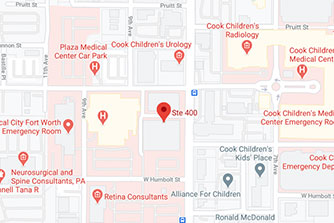
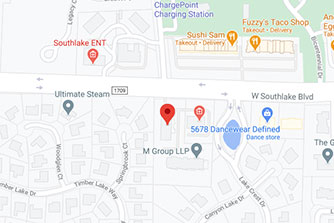
If forehead lines have been on your mind, our team is here to help you explore your options. Contact Jonathan Heistein, M.D. today to schedule a consultation at our Fort Worth or Southlake office. We proudly serve patients throughout Tarrant County and the greater DFW area.